


Hailing a car by tapping a phone screen felt like magic in 2010; today Uber is infrastructure in more than 70 countries. The app covers ride-hailing in several vehicle classes, plus scooters, bikes, and intercity options in some markets, and it shares an account with Uber Eats. Fares are quoted upfront before you confirm, payment happens in-app, and rider and driver rate each other after every trip.
That convenience runs on location data, and Uber's record here deserves scrutiny. The company once collected rider location for a period after drop-off before walking the practice back under public pressure, and it concealed a 2016 breach affecting 57 million users for about a year. Surge pricing, the two-way rating system, and driver-side economics all shape the experience in ways worth understanding before you ride, and we cover each below.
Airport runs and late nights
Uber's dispatch coverage at odd hours is its strongest case. Airport pickups have designated zones at most major hubs, the fare is agreed before the car arrives, and trip sharing lets someone follow your route home in real time.
Travelling abroad
One account works across most of the roughly 70 countries Uber serves, sparing you the local taxi negotiation and the currency arithmetic. Payment stays on your saved card, and the app's language does not change with the country you land in.
Households without a car
For people who drive rarely, pairing Uber with public transport can undercut the cost of ownership. Scheduled rides handle recurring appointments, and family profiles let you arrange and pay for someone else's trip from your own phone.
Upfront pricing and surge
Fares are quoted before you request, and Uber generally holds that price even if traffic shifts. During high demand the quote rises: surge is baked into the number you see rather than shown as a multiplier, so compare against a second app when a price looks steep.
Live trip tracking and safety tools
Every trip shows the driver's name, photo, plate, and live position. A share-trip option sends your route to chosen contacts, an in-app emergency button reaches local services, and audio recording of trips is available in some regions.
Two-way ratings
Riders rate drivers and drivers rate riders, and both scores matter: a low rider score can mean slower matches. The symmetry keeps behaviour in check on both sides, though it also discourages honest low ratings after an awkward trip.
One account, many services
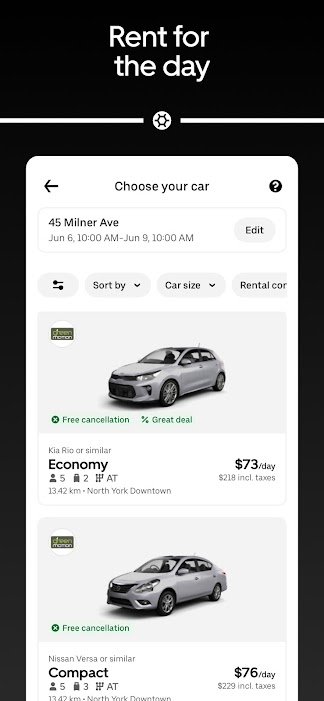
The same login covers vehicle classes from budget to premium, bikes and scooters in some cities, ride scheduling, and Uber Eats delivery. Uber One, the optional subscription, discounts rides and waives some delivery fees.